
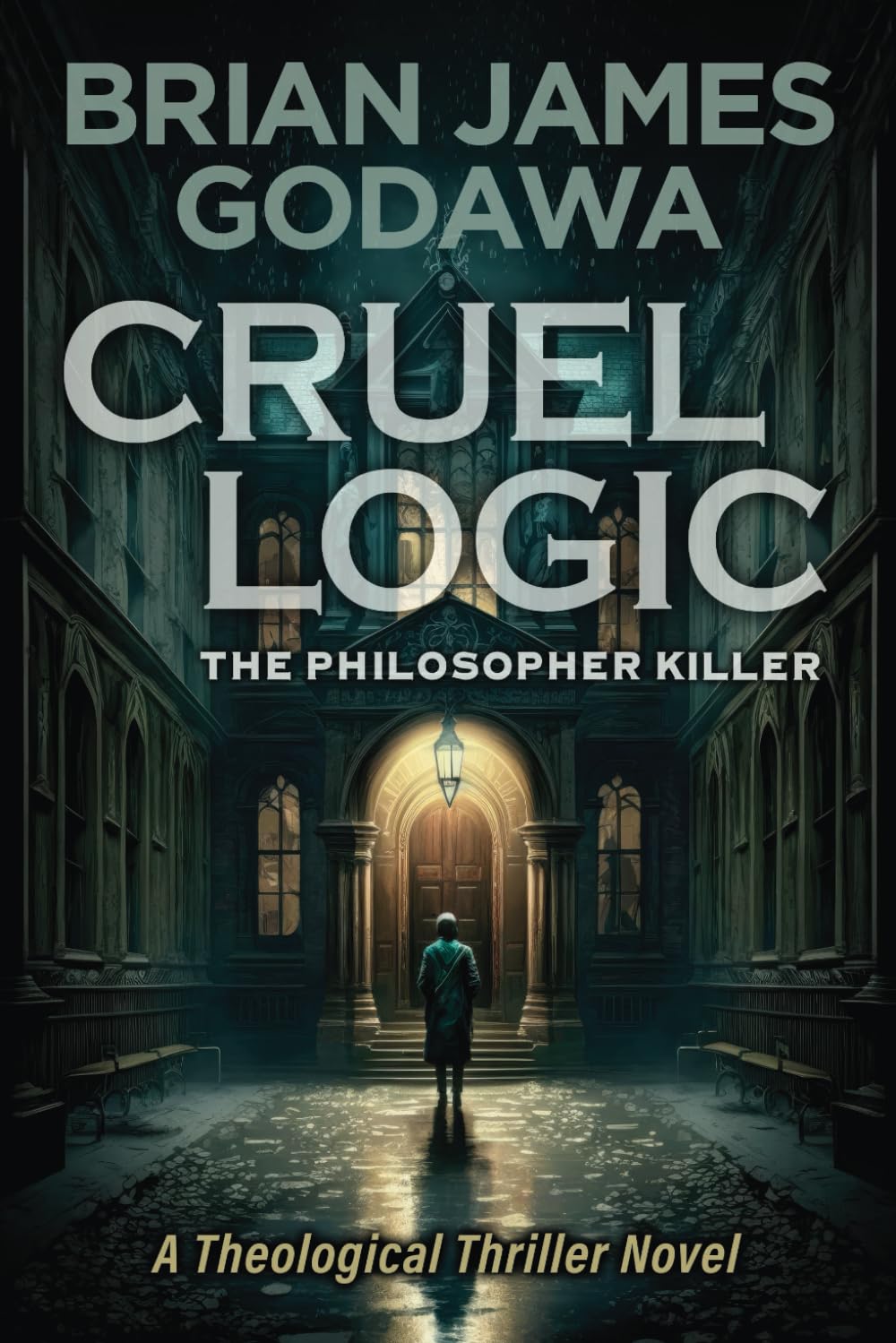
We don’t do many book reviews here nowadays. But sometimes I do read a book, and I couldn’t let this one go. Spoiler alert. I do get specific, because it’s important.
This reader wants great Christian apologetic fiction. The world needs Christian authors who demonstrate how to teach people of all ages strong belief in God, strong evidence for His truth and authority, and strong protections and weapons against the onslaught of evil. Many, if not all, readers also want exciting, suspenseful, edge of my seat, page-turning, “unputdownable” writing.
I thought perhaps this book would be that book. Unfortunately, Godawa has written a mess, as another reviewer pointed out, less kindly.
“Theological thriller” is part of this book’s description. Not sure what “theological” means in this context, though. The book is overflowing with philosophy but the theology seems sorely lacking. Maybe I got to skimming too much through the massive exposès of famous philosophers and expositions about the world’s beliefs and missed where the author presents any true study of the true God.
There is one small voice crying truth near the beginning, an African college student who seems unfortunately to fit the “Magic Negro” stereotype. Everything he says and does is perfect. I loved his boldness for God and His Word and truth, but his part in the drama is perfectly pointless since his words are dismissed by the teacher of the class and the character in the story who is supposed to be more important than he is. His voice is never heard or remembered again. Even Magic Negroes that follow the rules of tropes are usually treated better.
Godawa would have us believe that this book is meant to reflect reality. It is full of realistic language (the F-word, mostly), realistic events (lingering over heinous crimes and illicit sex scenes slightly before or slightly after they happen), and realistic people (though why we needed such a detailed description of a trans man’s makeup is beyond this reader’s ability to comprehend).
The serial killer only kills people who can’t defend their liberal philosophies. Well, that’s not strictly true. At first he did something heroic. But when people began to applaud his heroism, he suddenly experienced some sort of psychotic break and turned to heinous, senseless torture and murder. He then went on to kill other people who failed his “test” that required them to give evidence of why he shouldn’t kill them.
His future victims (after the senseless killings surrounding his heroism) all default to “murder is immoral” when they are living rampantly immoral lives, which makes the reader think they deserve to die. One reviewer said Godawa identifies with this murderer, even wants to be him, and I agree that he seems to vicariously live through the heartless and pointless discussions and gleeful murders.
The acts of violence are horrifying, disgusting, and drawn out. It’s a mystery why the author needed all this to be included except in hopes of personal catharsis. Clearly Godawa is desperate to change minds, heart, and lives. But there is no heart or soul to honor God here. God does judge sin and punish sinners, but has not the author merely usurped His position, much like his killer, calling himself “little g god?”
He wastes pages and pages of philosophical discourses on his parallel secondary character, whom this reader can only conclude is to be understood as a fake Christian boy. The kid swallows every contradictory, convoluted, and incomprehensible liberal argument thrown at him. He is utterly without resources to respond to nonbelievers, in spite of being raised in a pastor’s family and educated in a Christian school. Godawa absolutely does not want us to miss his apparent belief that a Christian upbringing and education are worse than useless. What other conclusion can we draw, since we don’t know the African student’s antecedents? but our noses are thoroughly rubbed in our secondary hero’s inadequate preparation for a nasty old secular university.
He certainly doesn’t want us to think families can be good and strong. Repeated examples of abuse, neglect, and generally awful dads have no counterpoint. Messed up people invariably have messed up families or mentors. And apparently nobody in the book had a healthy, effective family.
Where is God in all this? The true God, I mean, the one this Christian author was supposed to be teaching us about in this “theological” thriller? Aside from the eloquent but ignored African student, maybe God is hinted at on the last page or so. Maybe.
 FINDLEY FAMILY VIDEO